As an ancient market town, rich in history and culture, Dorking also boasts strong ties to the visual arts. From statues depicting great figures from the town’s long past and commemorative sculptures from special moments in time, to creative artworks, ornate archways and even a giant cockerel, taking a self-guided trail through Dorking’s artistic landscape can provide a fascinating glimpse into the town’s intriguing past and present day. Read on to learn more…
Mayflower Weathervane, West Street
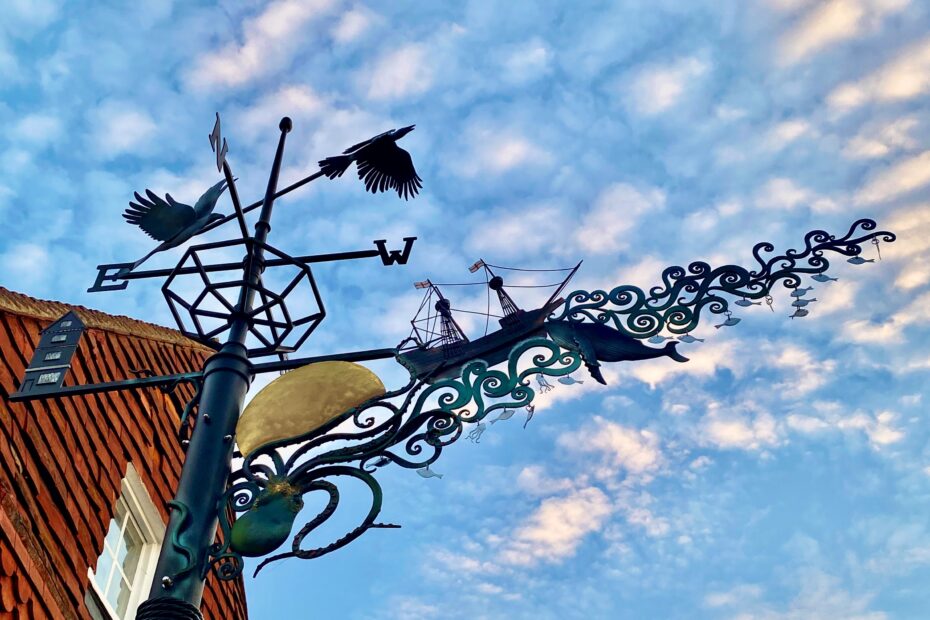
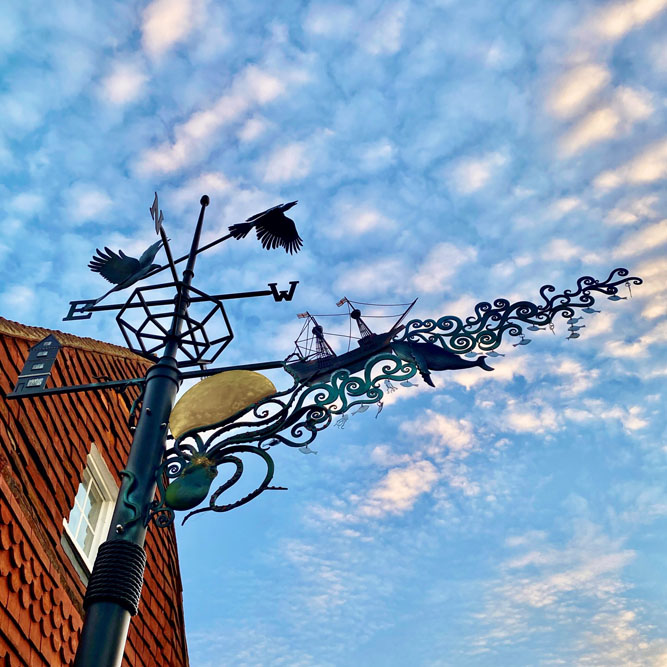
Starting your trail in West Street, locate the handsome weathervane at the centre of the historic street. Unveiled in 2021, it was created by Fire and Iron Gallery in Leatherhead to represent the town’s links to the Pilgrim Fathers. William Mullins, a shoemaker, his wife Alice and their children, Priscilla and Joseph, lived on West Street before boarding The Mayflower that sailed to the New World in 1620. Creatively crafted in metal and featuring a depiction of Mullins’ home (that still stands on West Street today as the only known home of a Pilgrim Father to have survived intact), the weathervane also features The Mayflower, sea creatures, swirling sea waters and birds in flight.
Allen Court Arch, High Street
Walking to the centre of the High Street, the beautiful ornamental archway at the entry to Allen Court was created in 2007 by Fire and Iron Gallery in Leatherhead. Adorned with plants, wildlife and nods to local landmarks, the arch was crafted from mild steel, stainless steel, aluminium and flint to commemorate famed Dorking resident Charles Grant Blairfindie Allen. One of the greatest minds of the 19th-century and a follower of Charles Darwin, Allen was a writer with an interest in philosophy, science and anthropology, strongly influenced by the natural world and the town’s surrounding Surrey Hills.

Vaughan Williams Statue, Reigate Road
Exploring further through the town to the far end at Reigate Road, discover a statue to one of the country’s best-loved composers. Ralph Vaughan Williams, the renowned British composer that lived in Dorking and is most known for his popular Lark Ascending, famously conducted the Leith Hill Music Festival at Dorking Halls for many years. Unveiled in 2001 by Ursula Vaughan Williams his wife, the statue of the great man takes pride of place outside the front of the Surrey theatre, having been created by William Fawke (who also designed the Thomas Cubitt statue opposite – see below).

Thomas Cubitt Statue, Reigate Road
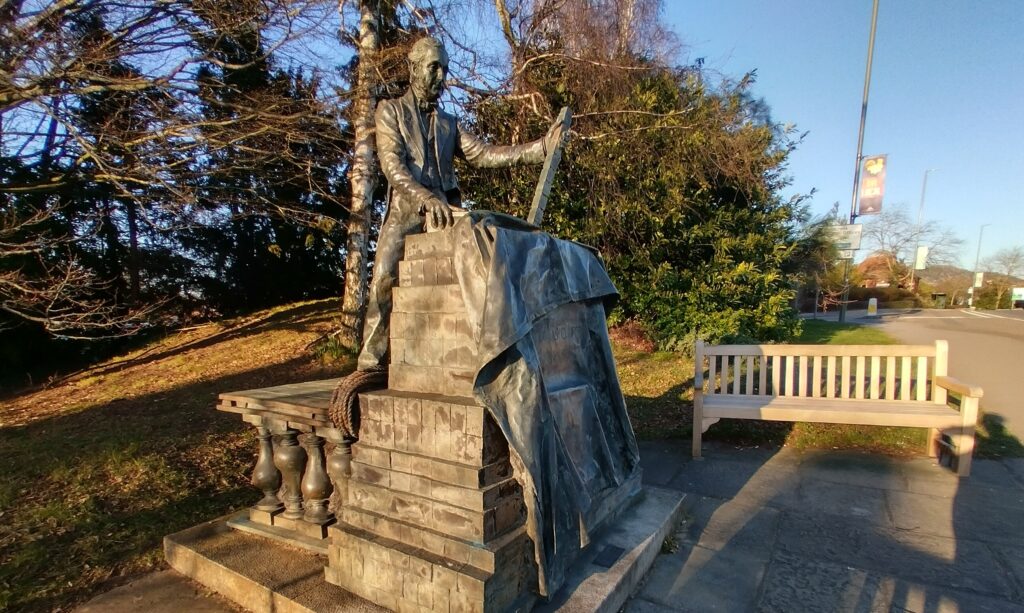
Thomas Cubitt, the great master builder known for the east front of Buckingham Palace, Queen Victoria’s Osborne House, large sections of Eaton Square in London’s Belgravia and the rebuilding of Polesden Lacey in the early 1820s, lived at the Denbies estate in Dorking in a mansion that he also famously designed. Today, his links to Dorking are marked by a statue built by William Fawke that stands opposite Dorking Halls on Reigate Road. The statue depicts a smartly dressed Cubitt holding a brick measure, standing behind a stack of bricks, with the tribute: ‘A great builder and a good man’.
Dorking Cockerel, Deepdene Roundabout
Arguably the most famous of the Dorking sculptures, the three-metre high Dorking Cockerel statue sits on the roundabout on Deepdene Avenue, welcoming visitors to the town and providing a much talked about and highly recognised landmark. Created by Leatherhead’s Fire and Iron Gallery to represent the ‘Dorking’ breed of cockerel known for its five toes, the sculpture is modelled on a real cockerel called Glen II from Headley. The hollow sculpture was created from galvanised mild steel by sculptor Peter Parkinson and set on the roundabout to face south-east because cockerels like to face the rising sun. A much-loved Dorking icon, the cockerel is regularly adorned with colourful knitted creations by the town’s Guerilla Knitters to mark special occasions, such as Dorking’s role in the 2012 Olympics.

Cycle Statue, Denbies Roundabout
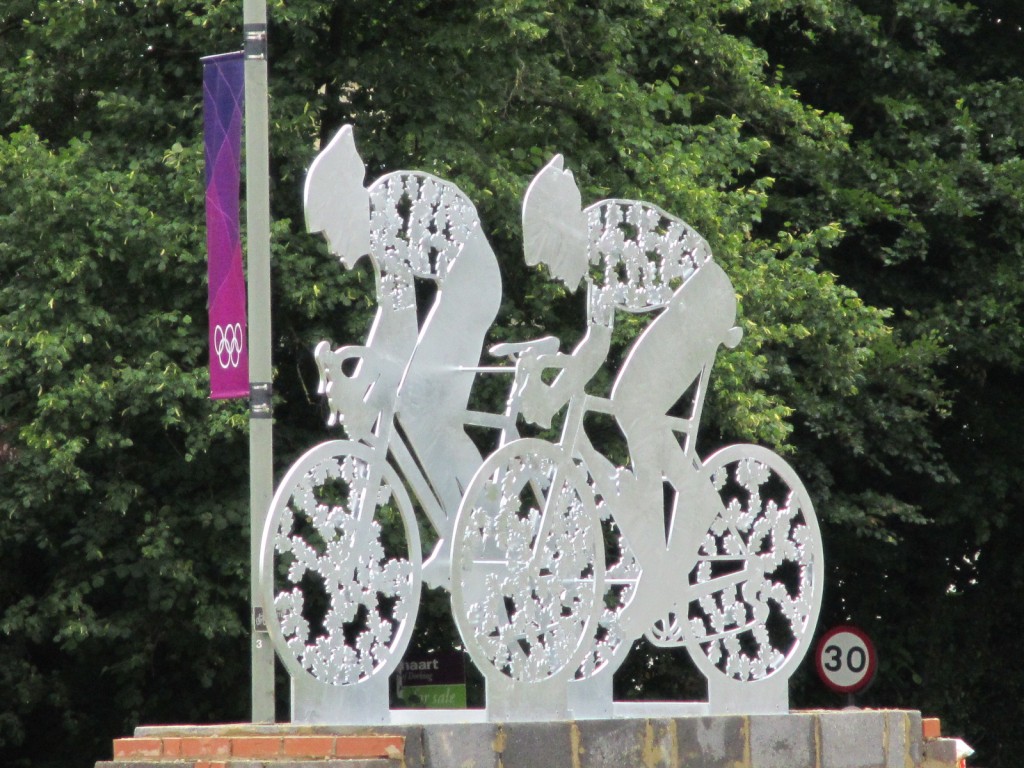
Created to commemorate the London 2012 Olympic Cycling Road Races which sped by in July 2012, the attractive Cycle Statue takes a key position on the roundabout of the A24 by the entrance to Denbies Wine Estate. Greeting visitors as they arrive into Dorking by road from the north, the statue shows a pair of intrepid cyclists whose cycle vests and bicycles are formed of 300 small oak leaves, each purchased by a local person to contribute to the sculpture. The work by Heather Burrell was made from laser cut sheets of steel, worked and galvanised and set in a brick plinth for maximum impact.